Executive Overview
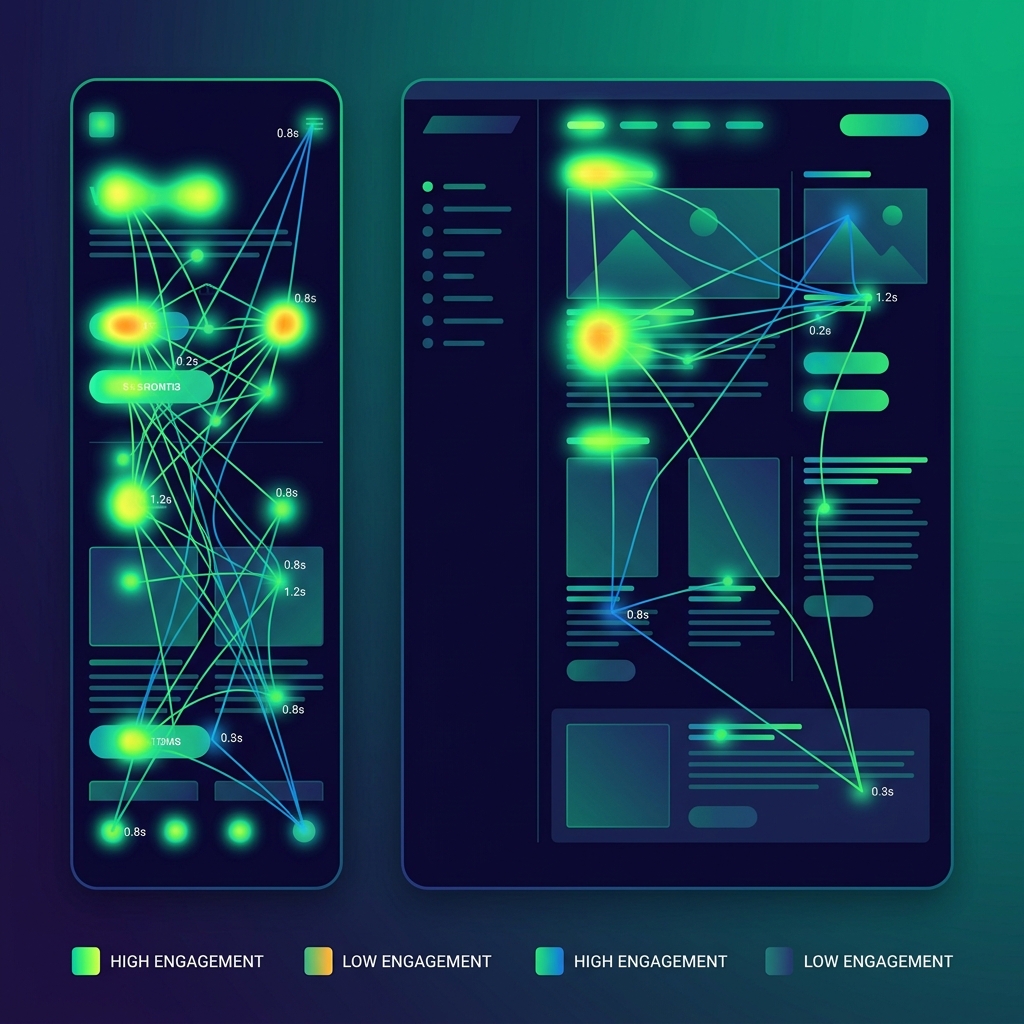
Using computer vision pipelines to simulate human eye-tracking paths and predict UI hotspots before user testing.
Key Architectural Takeaways
- Replaced manual 2-week eye-tracking studies with instant algorithmic vision analysis.
- Spectral Residual analysis isolates high-contrast visual entry points across UI layouts.
- NumPy array operations and OpenCV C++ bindings process 1080p UI screenshots in under 45ms.
- Empowered 4,000+ Figma & Chrome users to optimize visual hierarchy prior to deployment.
Traditional eye-tracking studies are expensive, slow, and unscalable during rapid product iteration. By leveraging OpenCV feature detection, spectral visual saliency algorithms, and color space mathematical transformations exposed via asynchronous FastAPI endpoints, product teams receive instant visual attention heatmaps and CTA focus scores directly inside Figma and browser extensions in under 50ms.
Eliminating Empirical Eye-Tracking Bottlenecks
Product Vision: Provide quantitative, empirical visual feedback at the moment of design creation rather than post-launch user analytics.
Design review iterations frequently stall due to subjective opinions on visual hierarchy. Physical eye-tracking labs require expensive hardware, participant recruitment, and days of data collection. To solve this, we engineered an algorithmic vision pipeline that predicts visual attention hotspots automatically by analyzing luminance, color opponency, and structural edge density in UI screenshots.
The Vision Algorithm Pipeline
The image processing pipeline operates in three stages: Image Decomposition, Spectral Residual Saliency Computation, and Gradient Heatmap Rendering. Input screenshots are transformed into grayscale and converted to the frequency domain using Discrete Fourier Transform (DFT). The spectral residual represents the visual surprise—regions that diverge from the natural image frequency spectrum—which corresponds strongly to human visual attention focus.
Low-Latency Service Architecture
Exposing heavy computer vision models to real-time design plugins requires tight performance constraints. By utilizing in-memory NumPy byte buffers and asynchronous FastAPI worker threads, the service processes 1080p UI frames, generates heatmap overlays, and returns encoded PNG payloads in under 45ms, enabling real-time preview as designers drag elements across their Figma canvas.
Topics & Domain Keywords
OpenCVComputer VisionFastAPIPythonPredictive HeatmapsVisual AttentionNumPy